Modular construction, dismantling & service
Read more
As you may know: an interior is never really finished. Organizations are changing, spaces are being used differently and materials are aging. That's why we offer service, maintenance and modular solutions that ensure that your interior remains easily adaptable, demountable and future-proof. As a result, your layout changes with your organization.
We think beyond just delivery. With modular systems and circular (customized) solutions, we reduce waste and make it possible to reuse or move parts. This way, spaces remain flexible and your investment will pay off for longer.
For preventive, periodic or corrective maintenance, updates and adjustments, we are ready with our team that switches quickly and knows exactly how the interior is structured. That makes our service and aftercare efficient, reliable and — above all — forward-looking!
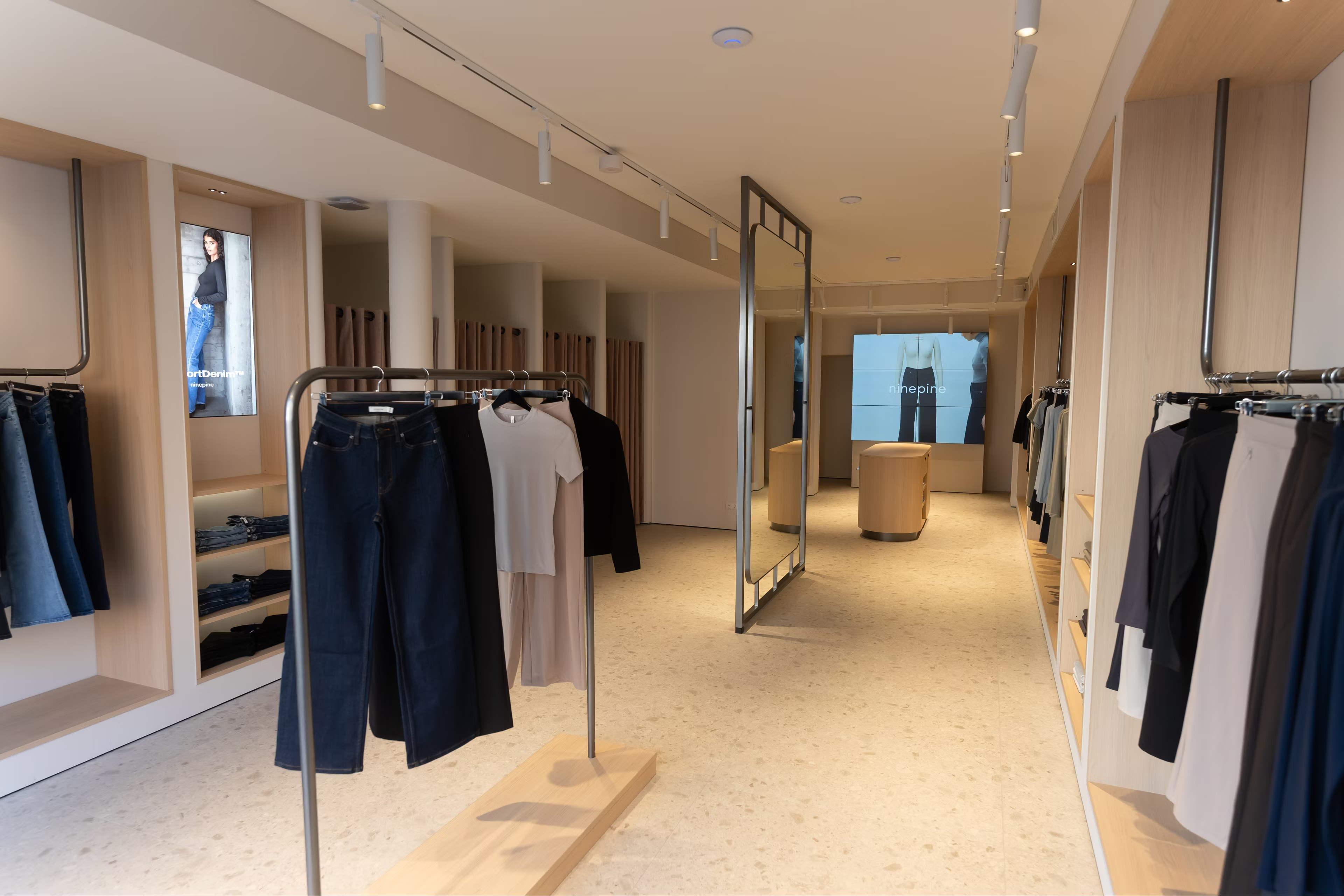
Amsterdam’s city life is getting a new retail experience. With the opening of the Ninepine Store, shopping here becomes not just functional but also inspiring. Behind the doors, Issos has created a modern and thoughtfully designed interior where design, comfort and experience come together, allowing visitors to experience the essence of Ninepine, stylish and versatile essentials, on every square meter.
Sure. We regularly work in construction teams with external architects, contractors and consultants. We coordinate our role flexibly: from interior construction alone to taking care of the entire process.
No. We also take on smaller assignments and sub-projects with the same care and professionalism. Think of reception areas, pantries, meeting rooms or custom solutions where quality and detail are important.
Turnkey means that we take care of the entire process: from engineering to planning, execution and aftercare. One point of contact, one schedule, one result. No separate links, but one sleek whole.
Yes. We have our own production in-house and work with a permanent group of high-quality production partners. We engineer, plan and coordinate everything — including production, installation and delivery. This is how we guarantee quality, planning and a high level of finish.
Because we contribute ideas from practice to the practical feasibility of a project. We often see where bottlenecks can arise and how to prevent them — technically, financially or architecturally. This way, you prevent delays and failure costs.