Project management & turnkey coordination
Read more
Every interior project has challenges: planning, interests, technical requirements and tight deadlines. Our project management team ensures that all these components remain in balance. We coordinate all parties, monitor quality and ensure that decisions are made at the right time.
With one point of contact, our clients keep an overview and clarity throughout the process. In our projects, we monitor progress, construction planning and budget and proactively address the risks. This prevents delays, miscommunication or surprises afterwards.
The strength of our project management lies in our commitment, professional communication and experience with projects where safety, quality and deadlines are not negotiable.
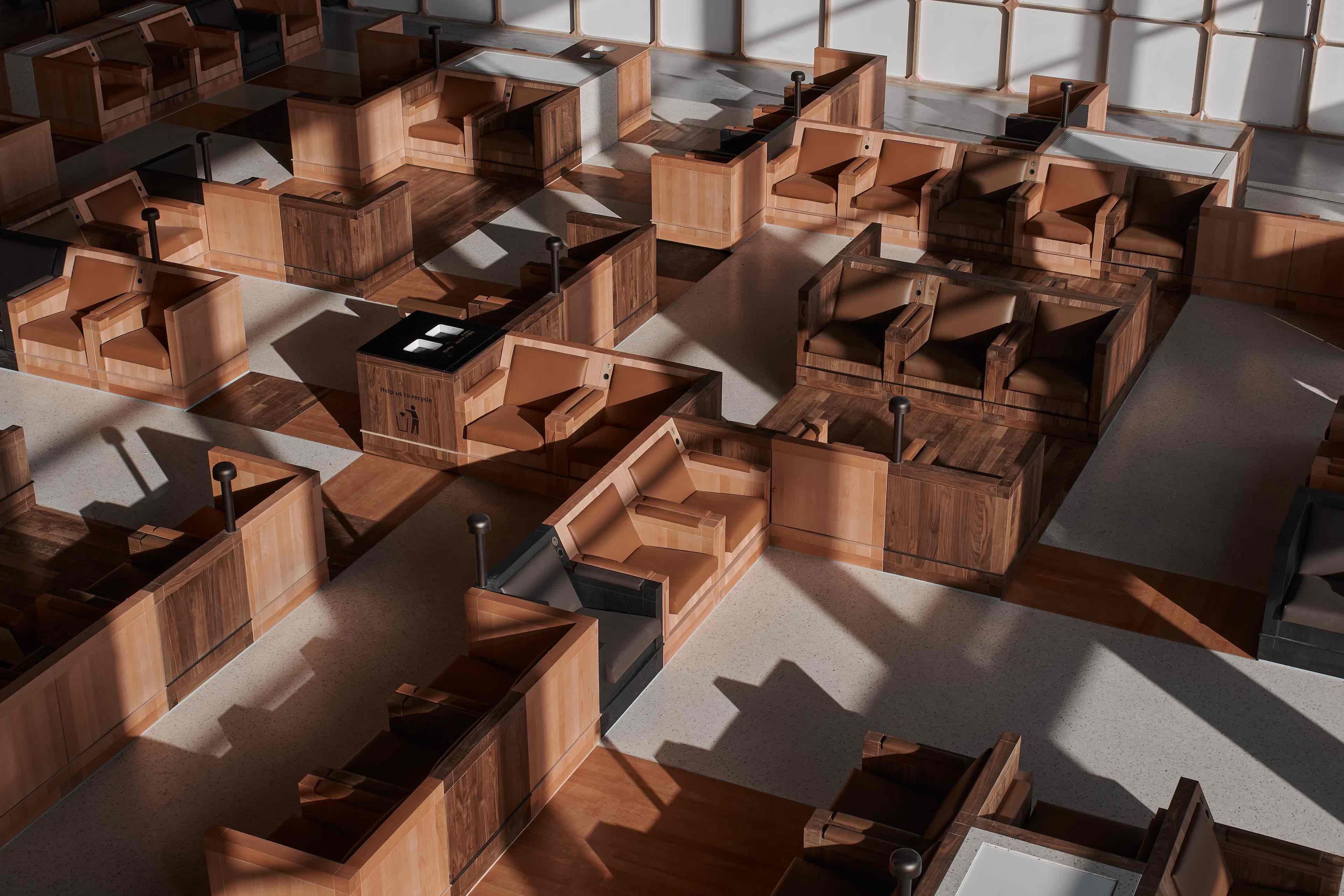
In Lounge 2 at Schiphol Airport, Issos created a new seating and lounge area designed for intensive daily use in a high-traffic airport environment. The custom-designed interior brings together comfort, luxury, and efficient passenger flow above a high-end retail space.

Sure. We regularly work in construction teams with external architects, contractors and consultants. We coordinate our role flexibly: from interior construction alone to taking care of the entire process.
No. We also take on smaller assignments and sub-projects with the same care and professionalism. Think of reception areas, pantries, meeting rooms or custom solutions where quality and detail are important.
Turnkey means that we take care of the entire process: from engineering to planning, execution and aftercare. One point of contact, one schedule, one result. No separate links, but one sleek whole.
Yes. We have our own production in-house and work with a permanent group of high-quality production partners. We engineer, plan and coordinate everything — including production, installation and delivery. This is how we guarantee quality, planning and a high level of finish.
Because we contribute ideas from practice to the practical feasibility of a project. We often see where bottlenecks can arise and how to prevent them — technically, financially or architecturally. This way, you prevent delays and failure costs.